
Nevada Tax Residency Rules
No state income tax, how to establish domicile, and why your former state still decides.
Last updated: November 15, 2026 | By the Domicile365 Editorial Team
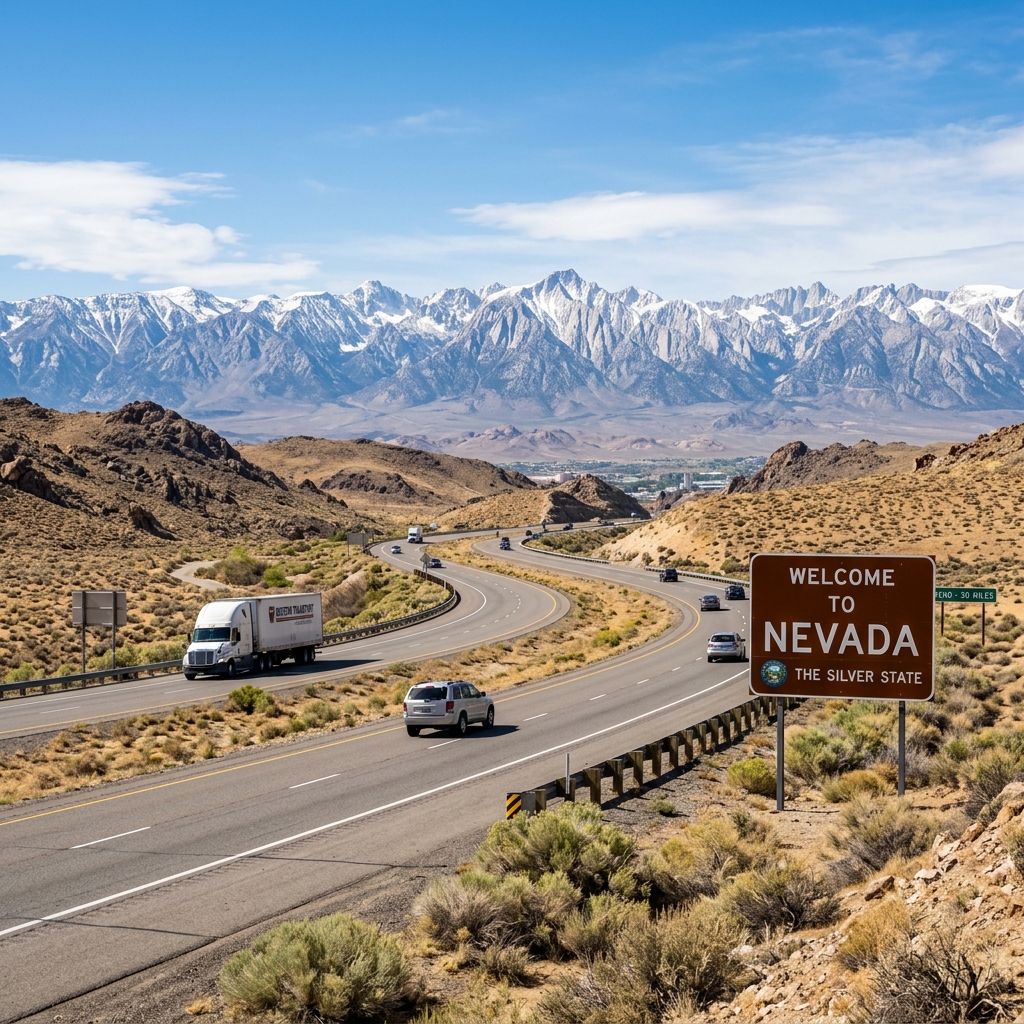
Nevada State Tax Residency Summary
Nevada does not tax personal income. Article 10, Section 1(9) of the Nevada Constitution provides that no income tax may be levied on the wages or personal income of natural persons, so there is no Nevada personal income tax return, no Nevada residency test for income tax, and no Nevada 183-day rule.
That changes what "Nevada tax residency" means in practice. Nevada will not ask you to prove you are a resident. The state you left will ask you to prove you are no longer one of theirs. Two questions decide the outcome:
- Domicile: Did you really make Nevada your permanent home and give up your old one?
- Statutory residency: If you kept a home in your former state, did you spend enough days there for that state to tax you as a resident anyway?
Both are judged under the former state's law, not Nevada's. The rest of this article covers Nevada's own rules first and then the rules of the states people most often leave.
Nevada Taxes at a Glance
| Tax | Nevada's position |
|---|---|
| Personal income tax | None. Prohibited by Nev. Const. art. 10, § 1(9). |
| Interest, dividends, capital gains, retirement income | Not taxed at the state level. |
| Estate, inheritance and gift tax | None. An inheritance tax is prohibited (art. 10, § 1(7)). An estate tax is allowed only up to a federal credit for state death taxes (art. 10, § 4), which federal law does not currently provide. Nevada has no gift tax. |
| Business taxes | No corporate income tax, although the constitution permits taxes on business income or revenue. Businesses may owe the Commerce Tax on Nevada gross revenue above $4 million a year and the Modified Business Tax on payroll. |
| Property tax | The yearly increase in the tax bill is capped at 3% for an owner's primary residence and 8% for other property (NRS 361.4723). |
| Sales tax | Imposed at combined state and local rates that vary by county. |
How Nevada Defines Residence
Nevada's general definition is in NRS 10.155. Unless a specific statute says otherwise, a person's legal residence is the place where the person has been physically present during all of the period for which residence is claimed. Time away is not counted against you if you leave with a good-faith intention to return without delay and continue your residence. This is a general definition for rights that depend on residence, not a tax rule, and it sets no minimum period.
Domicile is the related, stricter idea used in tax disputes: the one place you intend to be your permanent home and to return to whenever you are away. You can own several residences but have only one domicile. A domicile, once established, continues until you both leave it and establish a new one. That is why buying a house in Las Vegas, Henderson, Reno or Incline Village does not by itself move your domicile.
How Long Do You Have to Live in Nevada to Be a Resident?
For tax purposes there is no minimum period. A change of domicile takes effect when you are physically present in Nevada with the intention of making it your permanent home. What takes time is building the evidence that the move was real.
Several Nevada programs set their own periods, which are often confused with a tax rule:
- Driver's license and vehicle registration: the Nevada DMV requires new residents to obtain both within 30 days of becoming a resident.
- Divorce: generally six weeks of residence before filing.
- In-state tuition: generally twelve months of residence.
None of these periods controls how your former state sees you. A person can meet every Nevada requirement and still be taxed as a California or New York resident.
Establishing Nevada Domicile
Tax authorities in other states look for a consistent picture in which Nevada has become the center of your life. The usual steps are:
- A real home. Buy or take a long-term lease on a Nevada residence and live in it. If you keep the old home, the Nevada home should be the one you actually treat as home, and the comparison of size, value and use matters.
- Your belongings. Move the things you care about most: family photographs, art, heirlooms and pets.
- License, registration and voting. Obtain a Nevada driver's license, register your vehicles in Nevada, register to vote in Nevada and vote there. Surrender the old license and cancel the old voter registration.
- Declaration of Domicile. Under NRS 41.191, a person who has established domicile in Nevada may file a sworn statement with the clerk of the district court in their county, stating that they live in and maintain a residence there that they intend to keep as their permanent home. A person who also keeps a residence in another state instead states that the Nevada residence is their predominant and principal home and that they intend to keep it so permanently. The statement must list where you formerly lived and any other residences you maintain, and it must be signed under oath; the clerk records it for a $5 fee (NRS 41.195). Clark County publishes a Statement of Domicile form; the copy linked here is dated 2007, so confirm the current form with the clerk. The statute adds that the filing does not replace any other way of proving domicile (NRS 41.197).
- Primary-residence property tax cap. Claim the 3% cap for your Nevada home with the county assessor. Only one Nevada property can be claimed as a primary residence, and you should stop claiming resident-only property tax benefits on a home in your former state.
- Day-to-day life. Move your doctors, dentist, accountant, attorney, banking, clubs and religious or community memberships to Nevada.
- Paperwork. Update your address with the IRS, employers, brokers, insurers and on your estate planning documents, and file a final part-year resident return in your former state.
- Time. Spend more of your time in Nevada than in the state you left.
Formalities Are Not Enough
A license, a voter registration and a filed declaration are expected, but auditors treat them as formalities. They carry little weight if your home, family, business and days say otherwise. In New York's Matter of Hoff, a couple with out-of-state licenses, voter registrations and a filed declaration of domicile were still held to be New York domiciliaries, largely because they spent more days in New York than in their new state. See Leaving New York: How to End New York Tax Residency.
Your Former State Decides
Because Nevada has no income tax, every Nevada residency dispute is really a dispute with another state. The test depends on which state you left.
California
California has no 183-day safe harbor. It treats as a resident anyone who is in the state for other than a temporary or transitory purpose, and anyone domiciled in California who is away only temporarily. The Franchise Tax Board compares your California and Nevada ties under a closest-connection analysis, and a person who spends more than nine months of the year in California is presumed to be a resident. Proximity makes this harder: with a home at Lake Tahoe, Reno or Las Vegas, trips back to California are easy and frequent, and each one is a California day. See California to Nevada: Surviving the FTB Residency Audit and California Residency Rules.
New York
New York applies two tests: domicile, and a statutory residency test that taxes anyone who keeps a permanent place of abode in New York for substantially all of the year and spends 184 days or more there. See A Home in New York and a Home in Nevada or Florida: Which State Taxes You?
Other states
Many states pair a domicile test with a day-count test tied to keeping a home in the state. See the state guides for Washington, Oregon, Idaho, Arizona, Colorado and Hawaii, and The 183-Day Rule Explained for how these tests compare.
If You Keep a Home in Your Old State
Keeping the old home is the most common reason a move to Nevada fails. It counts against you twice: it is a tie that weighs against a change of domicile, and in states with a statutory residency test it is the home that makes your days there count toward residency.
Days are usually counted generously to the state. In most states any part of a day is a full day, so a day trip, an arrival day and a departure day all count. Some states allow narrow exceptions for days spent only passing through. See What Counts as a Day for Tax Residency and Transit Days and Tax Residency.
Income Your Former State Can Still Tax
Your former state stops taxing your worldwide income once you are no longer its resident: your domicile has moved to Nevada, and you are not caught by that state's statutory residency test. That does not end its tax on income from sources inside the state. A person domiciled in Nevada can still owe tax elsewhere on wages for days worked there, income from real estate or a business there, and deferred compensation or equity awards earned while working there. See Apportioning RSUs and Deferred Compensation.
Burden of Proof & Record Keeping
The person claiming a change of domicile generally has to prove it, and in a statutory residency dispute the taxpayer generally has to show where they were day by day. Audits usually begin a year or more after the tax year ends. Auditors commonly ask for cell phone records, credit card and bank statements, toll records, airline records and calendars, and gaps in those records tend to be resolved against the taxpayer.
A contemporaneous location log is the strongest answer. It records where you were on every day of the year as it happened, including the days when you made no purchases and took no flights. The Domicile365 App records your location automatically, counts presence at any time during a day as a day in that state, and shows your Nevada count next to your count for California, New York or any other state, so you can see during the year how your time is divided.
Frequently Asked Questions
Does Nevada have a state income tax?
No. Article 10, Section 1 of the Nevada Constitution prohibits an income tax on the wages or personal income of natural persons. Nevada residents file no state personal income tax return, and Nevada does not tax interest, dividends, capital gains or retirement income.
How long do you have to live in Nevada to be a resident?
For tax purposes there is no minimum period. Nevada's general definition of legal residence, NRS 10.155, turns on physical presence and sets no minimum period, and a change of domicile takes effect when you are physically present in Nevada with the intention of making it your permanent home. Specific programs set their own periods: the DMV requires a Nevada driver's license and vehicle registration within 30 days of becoming a resident, a Nevada divorce generally requires six weeks of residence, and in-state tuition generally requires twelve months. None of those periods controls whether your former state still treats you as its resident.
Is there a 183-day rule in Nevada?
No. Nevada has no personal income tax, so it has no 183-day or statutory residency test. The 183-day tests that matter belong to other states. If you keep a home in a state such as New York and spend 184 days or more there, that state can tax you as a resident even though your domicile is Nevada.
What is a Nevada Declaration of Domicile?
Under NRS 41.191, a person who has established domicile in Nevada may file a sworn statement with the clerk of the district court in their county, stating that they maintain a residence there that they intend to keep as their permanent home. A person who also keeps a residence in another state states that the Nevada residence is their predominant and principal home. It is useful evidence of intent, but it does not by itself prove a change of domicile to another state's tax authority.
Can California still tax me after I move to Nevada?
Yes, in two ways. If California concludes that your move was not genuine, or that you are in California for other than a temporary or transitory purpose, it can tax you as a resident on all of your income. And even after a genuine change of domicile to Nevada you remain taxable in California on California-source income, such as wages for work performed there, income from California real estate or a California business, and some equity compensation earned while working in California.
Conclusion
Nevada asks nothing of you for income tax purposes; the state you left asks for proof. Make Nevada the real center of your life, take the formal steps so the record is consistent, treat any home you keep in your former state as a risk, and keep a daily record of where you were. This article is general information, not tax advice; consult your tax advisor about your specific facts.
Related Articles
California to Nevada: Surviving the FTB Audit
The closest-connection test and how California audits a move to Nevada.
Read MoreA Home in New York and a Home in Nevada
Which state taxes you when you keep homes in both.
Read MoreStatutory Resident 183-Day Rule
How statutory residency, permanent abodes and day counts work across states.
Read MoreDefend Your Nevada Residency
Do not rely on incomplete records or manual spreadsheets. Use the Domicile365 App to create a defensible, GPS-based log of your location.
Sign up for a free 60-day trial and start tracking today.




Advising clients on a move to Nevada? See Domicile365 for Advisors & CPAs.